Introduction
Dumpling Ramen Bowl is a delightful fusion dish that brings together the heartiness of dumplings and the umami-rich broth of ramen. This comforting meal can warm you from the inside out, making it perfect for chilly evenings or a cozy night in. The combination of tender dumplings nestled in a bowl of flavorful broth, along with noodles and veggies, creates a satisfying experience that is both fulfilling and delicious.
Making a Dumpling Ramen Bowl at home may seem daunting at first, but with the right ingredients and a clear plan, it can be an enjoyable cooking adventure. The secret lies in balancing flavors, textures, and temperatures. Whether you choose store-bought dumplings or make your own, this dish promises to deliver comfort and joy with every bite.
Ingredients
- 4 cups chicken or vegetable broth
The foundation of your soup, the broth adds a rich, savory flavor that complements the other ingredients. Choosing a high-quality broth enhances the overall taste of the dish, so consider making your own for an extra layer of depth. - 200g fresh or frozen dumplings
Dumplings provide a hearty and satisfying element to the dish. Whether you opt for pork, chicken, or vegetable dumplings, they introduce a variety of flavors and textures that enhance the entire ramen experience. - 200g ramen noodles
Ramen noodles are essential for creating the signature texture of this dish. They absorb the broth's flavors while providing a chewy base, making them a perfect accompaniment to dumplings. - 1 cup shiitake mushrooms, sliced
Mushrooms lend an earthy taste and a meaty texture to the bowl, enhancing the umami profile of your broth. Shiitake mushrooms are particularly good for this dish due to their robust flavor. - 1 cup baby bok choy, halved
This leafy vegetable adds a fresh, crisp component to your ramen bowl. Bok choy also brings a nutritional boost, providing essential vitamins and minerals. - 2 green onions, sliced
Green onions contribute a mild onion flavor and a burst of color to the final dish. They also add a layer of freshness that balances the richness of the dumplings and broth. - 2 tablespoons soy sauce
Soy sauce is a staple for seasoning the broth. It contributes depth and saltiness, enhancing the flavors without overwhelming the dish. - 1 teaspoon sesame oil
This oil provides a nutty aroma and depth of flavor, enriching the overall experience. A little goes a long way, so use it sparingly for the best results. - 1 teaspoon ginger, grated
Ginger offers a warm, slightly spicy note, brightening the dish and aiding digestion, making it a perfect complement to rich flavors. - 1 tablespoon garlic, minced
Garlic adds a robust flavor and aroma to the broth, enhancing the overall taste profile. It complements the ginger well, bringing depth and warmth.
Directions & Preparation
Step 1: Prepare the broth
Start by bringing your chicken or vegetable broth to a simmer in a large pot. This step is crucial as it lays the foundation for your whole dish. Allowing the broth to simmer gently extracts flavors from any aromatics or spices you might add later, ensuring a rich and flavorful base for your ramen.
Step 2: Add seasonings
Once the broth is simmering, stir in the soy sauce, sesame oil, grated ginger, and minced garlic. This is where the broth starts to take on complex, layered flavors. Taste and adjust the seasonings as needed, remembering that incorporating these ingredients at this stage allows them to meld beautifully in the simmering liquid.
Step 3: Cook vegetables
Next, add the sliced shiitake mushrooms and baby bok choy to the broth. Vegetables deserve a little cooking time to soften and release their flavors into the broth. Cooking them until just tender ensures they maintain some crunch, enhancing the textural variety of your bowl.
Step 4: Cook the dumplings
Introduce the dumplings to the simmering broth and cook until they are warmed through and float to the top. This step is vital as dumplings soak up the broth's flavors, resulting in delicious bites that are both soft and flavorful. Pay attention to cooking time to avoid overcooking them.
Step 5: Prepare the noodles
While the dumplings are cooking, separately boil the ramen noodles according to package instructions and drain. It's essential to keep the noodles al dente so they maintain their texture in the broth. This prevents them from becoming mushy and ensures you have that satisfying chew in your bite.
Step 6: Assemble the bowl
In a large bowl, add a serving of noodles, ladle in the broth with dumplings and vegetables, and top with sliced green onions. Presentation matters, and layering the ingredients beautifully creates a visually appealing dish. It’s also vital to ensure that each spoonful includes a little bit of everything for a balanced, flavorful experience.

Choosing the Right Dumplings
When selecting dumplings, consider the filling as it plays a significant role in the overall flavor of your bowl. Pork-filled dumplings can provide a rich and savory bite, while vegetable versions are lighter and add freshness. You may also choose to make your own dumplings for a personalized touch, tailoring the filling and seasoning to your liking.
Enhancing Your Broth
The broth is the heart of your dumpling ramen bowl, so spend time perfecting it. Beyond the basic ingredients, consider adding traditional toppings like a soft-boiled egg or nori (seaweed) for extra flavor. Experimenting with different broth bases, such as miso or tonkotsu, can also elevate your dish, allowing you to explore various culinary landscapes.
Balancing Flavors and Textures
A successful dumpling ramen bowl hinges on balancing flavors and textures. Incorporate crispy vegetables for crunch and soft dumplings for contrast. Don't hesitate to add different herbs or spice levels that suit your palate. The interplay of the broth, noodles, and fillings makes every bite exciting and ensures that your bowl is anything but one-dimensional.
FAQs
What if the broth tastes too salty?
If your broth is too salty, try adding more unsalted broth or water to dilute the saltiness. You can also include additional vegetables to balance flavors.
Can I use different noodles in the recipe?
Yes, you can substitute ramen noodles with udon or soba noodles, though the texture and cooking times may vary. Ensure they are cooked al dente.
What should I do if my dumplings are overcooked?
If your dumplings become overcooked and mushy, try using them in a stir-fry with some veggies and sauce for a flavorful alternative.
Is it okay to prepare the broth a day ahead?
Absolutely! Making the broth the day before allows the flavors to develop even further. Just reheat it when you're ready to assemble the bowl.
How can I add more vegetables to my ramen bowl?
You can enhance your dumpling ramen bowl with various vegetables like carrots, bell peppers, or snap peas, adding them to the broth at different cooking stages.
What if my ramen noodles fall apart?
If the noodles fall apart, they may have been cooked too long. For future reference, ensure to follow package instructions and test them a minute early.
Conclusion
Creating a Dumpling Ramen Bowl at home can be an engaging and rewarding experience filled with flavors and textures. Whether you stick to a classic recipe or experiment with different fillings and broths, this dish allows for creativity. Remember, the joy of cooking is not just in eating but in exploring new culinary horizons.
So gather your ingredients, invite a few friends, and enjoy a cozy evening making your very own dumpling ramen bowl. Each bowl serves as a canvas for you to express your taste preferences while indulging in a bowl of warmth and comfort.
Recipe Card
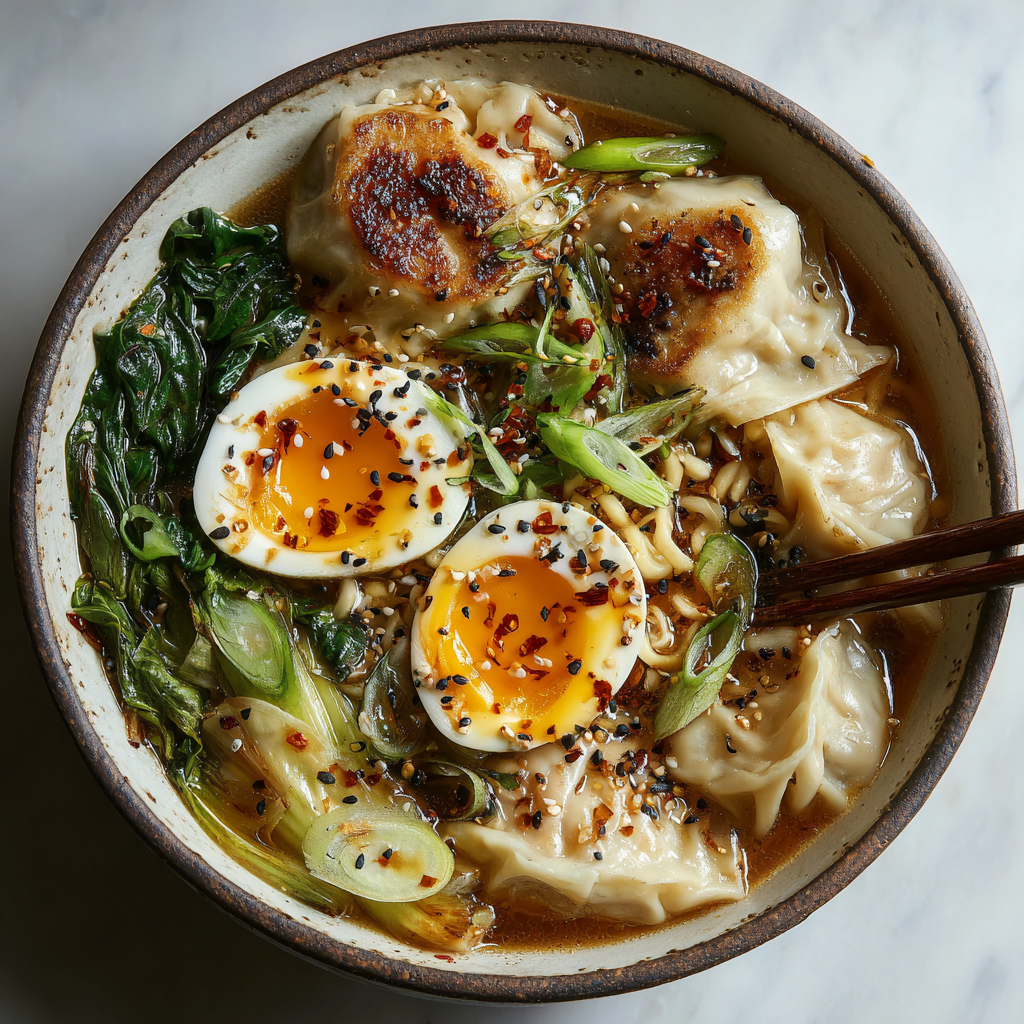
Crafting a Heartwarming Dumpling Ramen Bowl at Home
Ingredients
Method
- Prepare the broth
- Cook the dumplings
- Add mushrooms and soy sauce
- Incorporate ramen noodles
- Add spinach and sesame oil
- Assemble the bowl
- Garnish and serve
Notes
Additional serving suggestions: pair with a crisp salad, garlic bread, or roasted seasonal vegetables for balance.
For make-ahead, prep components separately and assemble just before heating to preserve texture.
Taste and adjust with acid (lemon/vinegar) and salt right at the end to wake up flavors.