Introduction
Casseroles are a beloved comfort food, and when you're following a low-carb lifestyle, they can still shine. This Low Carb Unstuffed Cabbage Casserole delivers all the satisfying flavors of traditional cabbage rolls without the fuss of rolling each leaf. It's a delicious and hearty dish that's perfect for busy weeknights or as a make-ahead meal for those evenings when time is tight.
Utilizing basic ingredients, this recipe combines ground meat, cabbage, and a rich tomato sauce. Everything bakes together to enhance the flavors, resulting in a cozy and nutritious dish that's perfect for family gatherings. The best part? It’s not only low in carbs but also high in fiber and packed with proteins, making it a hearty option for anyone looking to maintain a balanced diet.
Ingredients
- 1 large head of green cabbage, chopped
Cabbage is low in calories and rich in fiber, which helps with digestion. It provides bulk to the casserole, making it filling while keeping the carb count down. Its slight sweetness comes out during cooking, complementing the flavors of the meat and sauce. - 1 pound ground beef or turkey
The choice of ground meat forms the protein base of the casserole. Whether you opt for beef or turkey depends on your preference for taste and fat content. Lean meat ensures a healthier dish, while a bit of fat adds flavor and moisture. - 1 onion, diced
Onions contribute a natural sweetness and depth to the dish, balancing the acidity of the tomatoes. Sautéing the onions until translucent mellows their flavor, making them more palatable and aromatic in the casserole. - 3 cloves garlic, minced
Garlic brings a robust flavor to the casserole and is known for its health benefits. Freshly minced garlic releases essential oils that infuse the dish, providing a fragrant base that enhances the overall richness. - 1 can (15 ounces) crushed tomatoes
Crushed tomatoes add acidity, moisture, and a rich tomato flavor, acting as the sauce for the casserole. They help to bind the ingredients together while also creating a luscious and savory environment for the cabbage and meat. - 1 tablespoon Worcestershire sauce
This sauce introduces a savory depth to the dish. Its umami qualities enhance the flavors of the meat and meld beautifully with the tomatoes, giving the casserole the complex flavor profile reminiscent of traditional stuffed cabbage. - 1 teaspoon smoked paprika
Smoked paprika adds a warm, smoky flavor, replicating the traditional spices used in stuffed cabbage. Its vibrant color also adds a visual appeal to the casserole, making it even more appetizing. - Salt and pepper, to taste
Seasoning is essential to enhance all the flavors in your casserole. Salt brings out the natural tastes of your ingredients, while pepper adds a hint of heat, ensuring a well-rounded dish. - 1 cup shredded cheese (optional)
Adding cheese allows for a creamy texture and adds another layer of flavor. It can be customized based on your taste preferences, and using a low-carb option ensures that it fits within your dietary needs while still providing indulgence.
Directions & Preparation
Step 1: Preheat your oven to 350°F (175°C).
Preheating the oven is crucial for ensuring an even cook throughout the casserole. This step allows the flavors to meld together fully and prevents any part from being undercooked. A hot oven also helps in achieving a nice texture on the top of the casserole if cheese is used.
Step 2: In a large skillet, brown the ground beef or turkey over medium heat.
Browning the meat first develops flavor through the Maillard reaction, which creates a rich, savory base for the casserole. Ensure the meat is broken apart for even cooking, allowing for a consistent texture throughout the final dish.
Step 3: Add the diced onion and minced garlic to the skillet, cooking until the onion is translucent.
Sautéing the onion and garlic alongside the meat enhances the flavor profile of the casserole. The gentle heat softens the onions, sweetening them and allowing the garlic to release its aroma, enriching the entire dish's fragrance and taste.
Step 4: Stir in the crushed tomatoes, Worcestershire sauce, smoked paprika, and season with salt and pepper.
This step combines the flavors of the meat and vegetables with the vibrant acidity of the crushed tomatoes. The Worcestershire sauce and paprika add depth and complexity, fostering a well-rounded seasoning that complements the other ingredients.
Step 5: Add the chopped cabbage to the skillet, mixing well to coat the cabbage with the tomato mixture.
Incorporating cabbage at this point ensures it absorbs the flavorful sauce while cooking. It also helps to soften the cabbage before baking, allowing it to meld perfectly with the other ingredients as they cook together in the oven.
Step 6: Transfer the mixture to a greased 9×13 inch baking dish.
Transferring to a baking dish allows for even cooking and makes serving easier later. Greasing the dish prevents sticking, ensuring that your casserole comes out easily and remains intact when it's served.
Step 7: Cover the dish with aluminum foil and bake for 30 minutes.
Covering the casserole during this initial baking period traps steam, which helps the cabbage to cook down and become tender. This method also prevents the top from over-browning while the flavors meld together perfectly.
Step 8: Remove the foil and add the shredded cheese if desired, then bake uncovered for an additional 15 minutes.
Adding cheese during the last minutes of baking allows it to bubble and brown, creating a golden crust. This final touch provides a delightful contrast in texture and makes the casserole visually appealing to serve.
Step 9: Allow to cool for 5-10 minutes before serving.
Cooling the casserole slightly before serving helps the layers set, making it easier to slice and serve. This pause also allows flavors to further develop, resulting in a more harmonious dish.

Use High-Quality Ground Meat for the Best Flavor
Selecting high-quality ground meat makes a significant difference in the taste of your casserole. Look for grass-fed beef or organic turkey to ensure you’re working with fresh, flavorful protein. These options not only taste better but also often come with better nutritional profiles, elevating your dish further.
Adjusting Spice Levels to Suit Your Taste
Feel free to customize the spice levels according to your preferences. If you enjoy a bit of heat, consider adding crushed red pepper flakes or a dash of hot sauce. For a more aromatic version, you can introduce herbs like oregano or basil, transforming the casserole to suit your palate.
Make It Your Own: Ingredient Substitutions
This casserole is highly adaptable to whatever you have on hand. If you’re not keen on cabbage, try using other leafy greens, such as kale or Swiss chard. For a vegetarian version, substitute the meat with hearty vegetables like mushrooms or lentils, maintaining that satisfying feel without the meat.
FAQs
What do I do if the casserole turns out too watery?
If the casserole is watery, it could be due to excess moisture from the cabbage or tomatoes. To remedy this, you can let it bake a bit longer uncovered, allowing some of the liquid to evaporate. Alternatively, mix in a small amount of almond flour to help absorb the excess liquid.
Can I use frozen cabbage in this recipe?
Yes, frozen cabbage can be used, but it may release more water during cooking. Be sure to drain it thoroughly before adding to the skillet, and consider reducing other liquids slightly to compensate for the extra moisture.
Is there a way to make this dish spicier?
Absolutely! To add more heat, consider stirring in chopped jalapeños or a teaspoon of chili powder when you mix in the crushed tomatoes. You can also top the casserole with sriracha or hot sauce before serving.
What should I do if the casserole is bland?
If you find the casserole lacks flavor, try increasing the seasoning, particularly salt and pepper, after it comes out of the oven. Adding a splash of vinegar or a squeeze of lemon juice can also elevate the overall taste.
How can I make the casserole creamier?
To enhance the creaminess, mix sour cream or cream cheese into the meat and tomato mixture before baking. This addition elevates the texture and gives a deliciously rich flavor to the casserole.
Can I replace the crushed tomatoes with tomato sauce?
Yes, tomato sauce can be used as a substitute for crushed tomatoes. However, it tends to be smoother and less chunky, so the casserole may be less textured. Consider adding a bit of seasoning to compensate for the lack of depth.
Conclusion
This Low Carb Unstuffed Cabbage Casserole is a testament to the idea that healthy meals can be comforting and delicious. With its rich flavors and hearty ingredients, it's an easy way to enjoy a low-carb dish that doesn't skimp on taste or satisfaction. Whether shared with family or meal-prepped for the week ahead, it promises to be a dish everyone will love.
Give this recipe a try, and you might just find it becoming a staple in your cooking repertoire. With the freedom to adapt and personalize, it not only satisfies hunger but also can be a canvas for your culinary creativity. Enjoy your cooking adventures!
Recipe Card
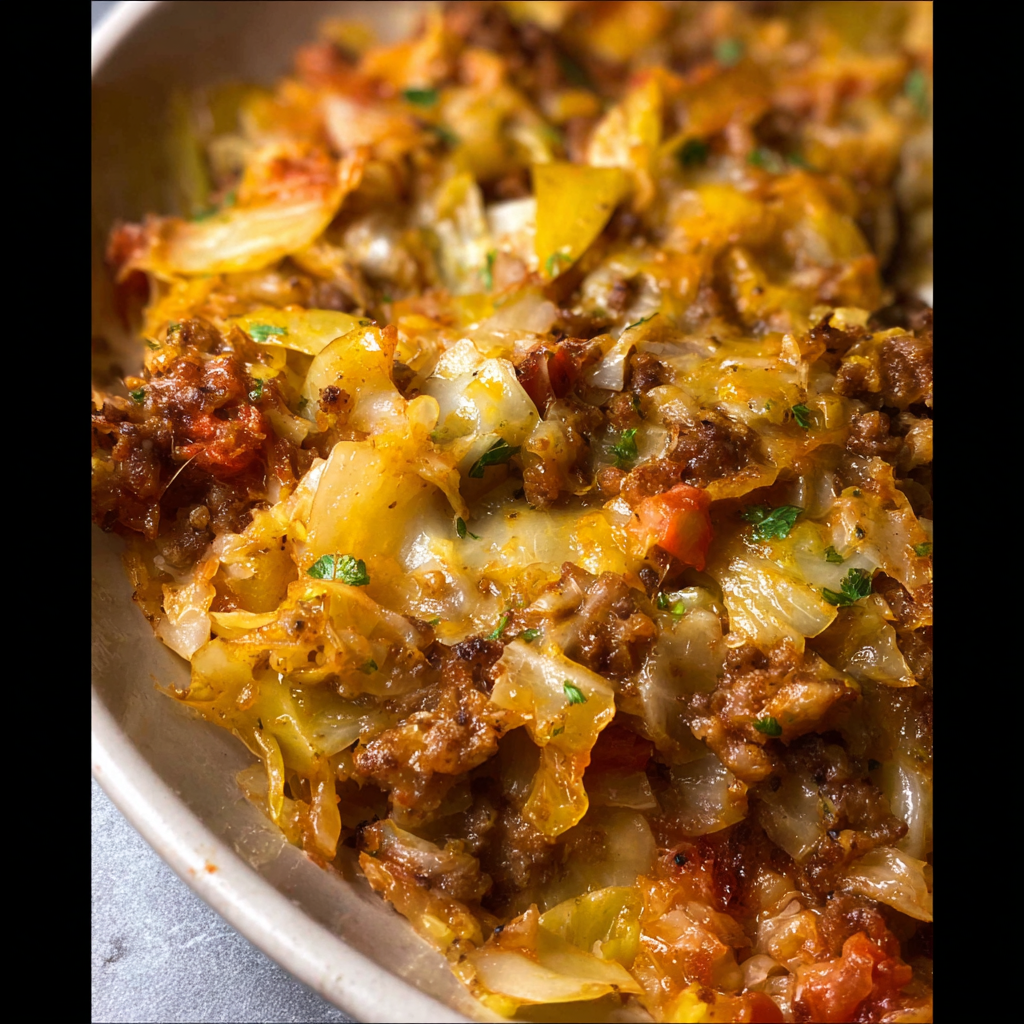
Savor the Flavors of Low Carb Unstuffed Cabbage Casserole
Ingredients
Method
- Preheat the oven to 350°F (175°C).
- In a large skillet, sauté the diced onion over medium heat until translucent.
- Add minced garlic and cook for an additional minute until fragrant.
- Add ground beef or turkey to the skillet, cooking until browned.
- Stir in the chopped cabbage, diced tomatoes, and beef broth.
- Season with oregano, smoked paprika, salt, and pepper.
- Bring the mixture to a simmer, then cover the skillet and let it cook for 10 minutes.
- Transfer the mixture to a baking dish and spread evenly.
- If desired, sprinkle shredded cheese over the top.
- Cover with foil and bake for 30 minutes, then uncovered for an additional 10 minutes.
- Remove from the oven and let it sit for 5 minutes before serving.
Notes
Additional serving suggestions: pair with a crisp salad, garlic bread, or roasted seasonal vegetables for balance.
For make-ahead, prep components separately and assemble just before heating to preserve texture.
Taste and adjust with acid (lemon/vinegar) and salt right at the end to wake up flavors.